What is Streamline by MultiTV?
Streamline is MultiTV's cloud-based video infrastructure platform, designed to manage the complete journey from video ingest and encoding to secure delivery and playback.
It brings together video transcoding, image optimization, packaging, storage, multi-CDN delivery, DRM, player services and video quality analytics within a single platform. This helps broadcasters, OTT platforms, media companies and enterprises simplify their video infrastructure without having to manage multiple disconnected technology vendors.
What is a Video PaaS?
A Video PaaS, or Video Platform as a Service, provides the underlying technology required to process, secure, manage and deliver video without an organization having to build and maintain the entire infrastructure itself.
Streamline works as a Video PaaS by providing services such as video encoding, adaptive bitrate packaging, storage, CDN delivery, DRM, playback and QoE analytics through an integrated platform and APIs.
This allows development and media teams to focus on their applications and content while Streamline handles much of the underlying video infrastructure.
What does a video infrastructure platform do?
A video infrastructure platform handles the technology between a source video file or live feed and the viewer's screen.
This can include ingest, transcoding, packaging, storage, content protection, CDN delivery, playback and quality monitoring.
Streamline brings these capabilities together into one pipeline, helping organizations avoid stitching together separate encoding, storage, CDN, DRM and analytics solutions.
What video transcoding capabilities does Streamline provide?
Streamline provides cloud-based transcoding for both VOD and live video workflows, including adaptive bitrate renditions up to 4K UHD.
It supports formats and streaming protocols such as HLS, DASH and CMAF, allowing a single source to be converted into multiple versions optimized for different devices, resolutions and network conditions.
Streamline also supports context-aware encoding designed to maintain video quality while reducing bandwidth and storage requirements.
What is adaptive bitrate streaming and does Streamline support it?
Adaptive bitrate streaming allows a video service to deliver different quality versions of the same content depending on the viewer's device and available bandwidth.
For example, a viewer on a high-speed connection may receive a higher-resolution stream, while another viewer on a slower network can automatically receive a lower bitrate version to reduce buffering.
Streamline creates adaptive bitrate ladders as part of its encoding and packaging workflow and supports HLS, DASH and CMAF delivery.
Can Streamline transcode live video as well as VOD?
Yes. Streamline supports both live and on-demand video transcoding.
Live feeds can be ingested through sources such as SRT and RTMP, while VOD assets can be processed from cloud storage and other supported inputs. The platform can then create the required adaptive bitrate renditions and prepare them for downstream delivery.
This makes Streamline suitable for live sports, news, events, OTT services and large VOD libraries.
Does Streamline support 4K and UHD video?
Yes. Streamline supports transcoding and processing workflows for 4K UHD content.
It can generate multiple resolutions and adaptive bitrate renditions from a high-quality source, allowing the same content to be delivered to different devices and network conditions.
This is particularly useful for OTT platforms, broadcasters and premium video services where maintaining high visual quality is important.
Which video formats and streaming protocols does Streamline support?
Streamline supports commonly used video processing and delivery workflows, including HLS, DASH and CMAF for streaming and packaging.
It also supports multiple input and output formats for video processing, allowing organizations to integrate the platform into existing media workflows rather than redesigning their entire content pipeline.
The exact input and output configuration can be tailored to the requirements of the application or distribution environment.
Does Streamline provide video packaging?
Yes. Streamline combines video encoding with packaging so that content can be prepared for modern streaming workflows from a single pipeline.
It supports HLS, DASH and CMAF packaging, allowing video content to be prepared for delivery across different devices, platforms and streaming environments.
This reduces the need for separate encoding and packaging systems and simplifies the overall video workflow.
What is multi-CDN video delivery?
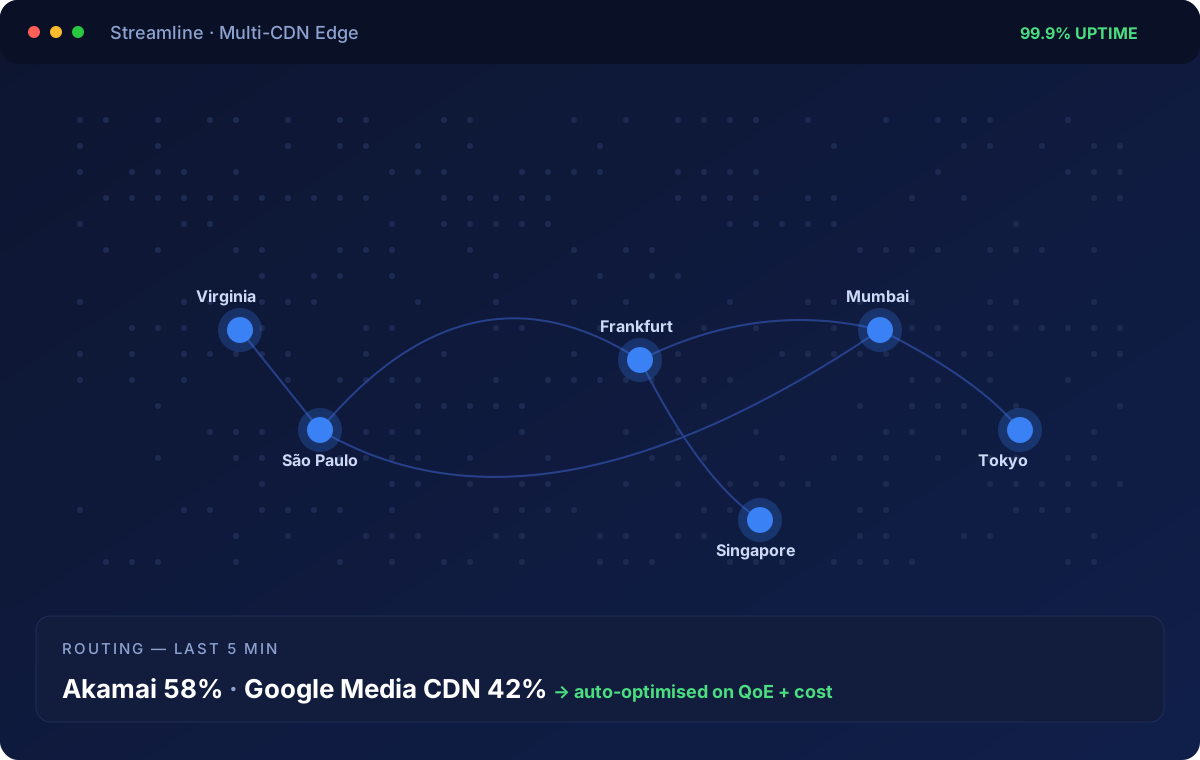
Multi-CDN delivery means using more than one Content Delivery Network to distribute video to viewers.
Instead of depending entirely on a single CDN, a video platform can route traffic through different delivery networks based on factors such as geography, performance, availability and cost.
Streamline provides multi-CDN delivery with options including Akamai and Google Media CDN, with regional routing and delivery controls managed through the platform.
Why should an OTT platform use a multi-CDN strategy?
A multi-CDN strategy can provide greater flexibility and resilience when delivering video at scale.
For example, traffic can be routed through different CDNs depending on the viewer's region or delivery performance. It can also help organizations manage delivery costs and reduce dependency on a single CDN provider.
For OTT platforms with large audiences across multiple countries, this can become an important part of their video delivery architecture.
Does Streamline provide global video delivery?
Yes. Streamline is designed for global video delivery through its multi-CDN infrastructure.
The platform supports regional routing, caching controls, token authentication and geo-based delivery policies, helping organizations deliver video securely to audiences across different markets.
This makes it suitable for global OTT services, broadcasters and media companies operating across multiple countries.
Does Streamline support DRM and secure video streaming?
Yes. Streamline supports multi-DRM and secure video delivery for premium content.
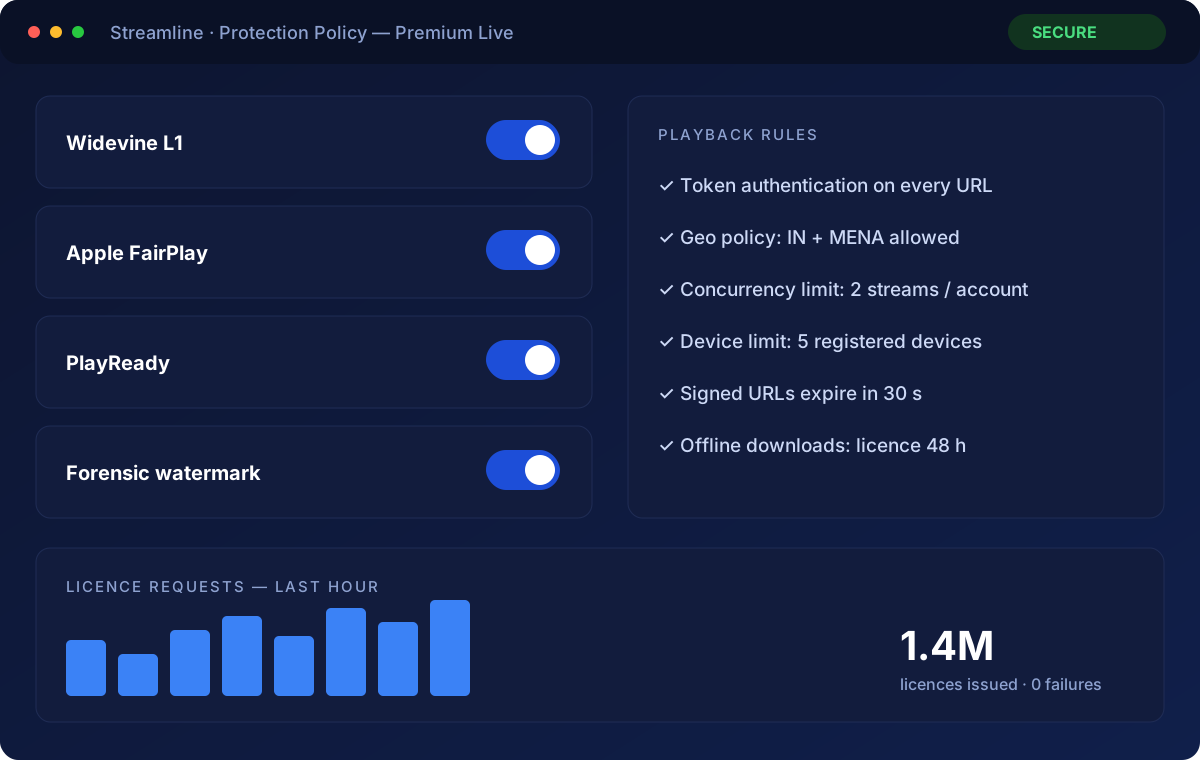
The platform supports major DRM technologies including Widevine, FairPlay and PlayReady, allowing content owners to protect video across different devices and operating systems.
Additional security controls can include signed URLs, token authentication, geo-blocking, concurrency controls and device restrictions.
What DRM technologies does Streamline support?
Streamline supports three major DRM technologies:
Google Widevine for Android, Chrome and supported platforms
Apple FairPlay for Apple devices and environments
Microsoft PlayReady for supported Windows and connected-device environments
Using multi-DRM allows OTT platforms and broadcasters to protect premium content across a broad range of devices without maintaining separate content-protection integrations for each platform.
Can Streamline protect premium and rights-controlled content?
Yes. Streamline is designed for secure delivery of premium video where content owners need greater control over who can access their content.
Organizations can combine DRM with authentication, signed playback URLs, geo-restrictions, device controls and concurrency policies.
These capabilities can be particularly important for premium sports, movies, subscription video and licensed content.
Does Streamline include video storage?
Yes. Streamline provides storage capabilities for media assets and their associated renditions.
The platform supports S3-compatible storage and can be integrated into existing cloud storage workflows. Media libraries can include original mezzanine files as well as processed video renditions.
Storage and delivery can be managed as part of the same overall video infrastructure instead of maintaining completely separate systems.
Can Streamline optimize images as well as video?
Yes. Streamline includes image processing alongside its video pipeline.
Images can be optimized and converted into modern formats such as WebP and AVIF, while video workflows can generate posters and other image assets.
This is useful for OTT platforms and media businesses that manage large numbers of video thumbnails, posters and other visual assets alongside their video library.
Does Streamline provide a video player?
Yes. Streamline includes player services designed for multi-device video playback.
The broader Streamline infrastructure connects the encoding, protection and delivery layers with playback and QoE monitoring, helping organizations understand what happens after the video reaches the viewer.
The player layer can support live and VOD experiences across web and other supported devices.
What is QoE analytics and why is it important for video streaming?
QoE stands for Quality of Experience. It measures how viewers actually experience a video stream rather than simply measuring whether the infrastructure is technically online.
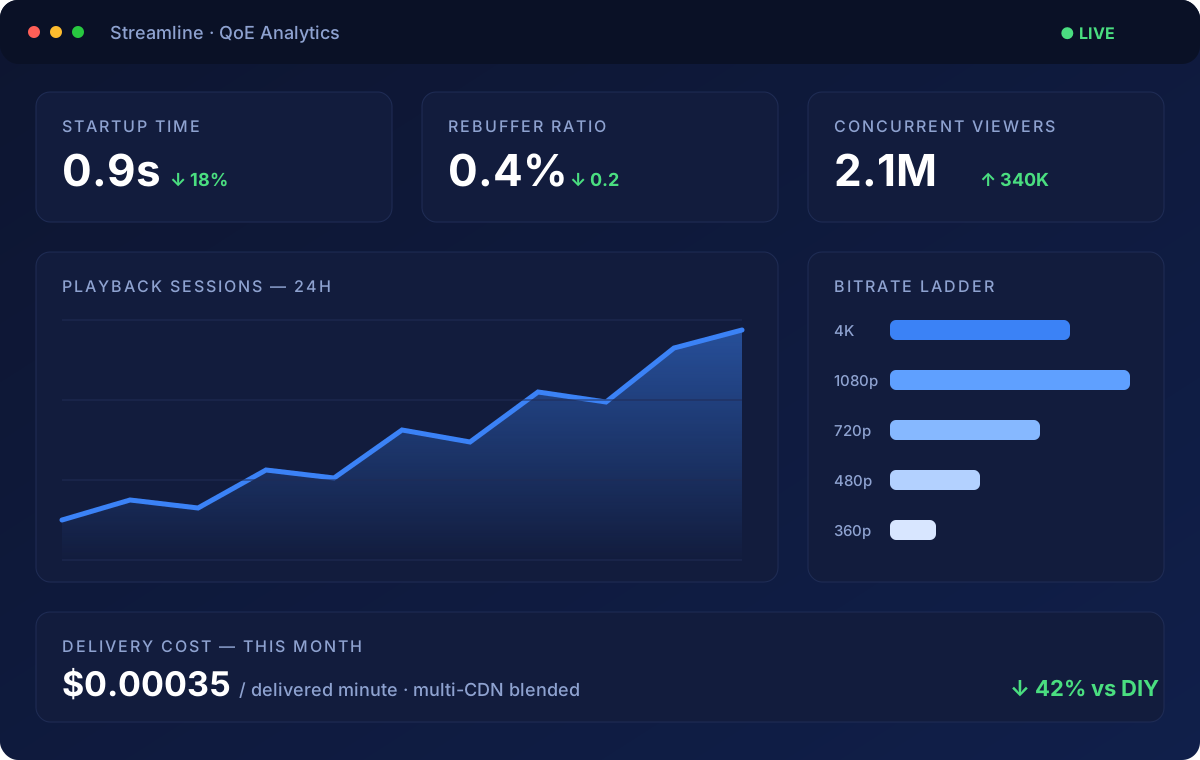
Metrics such as startup time, rebuffering, playback failures and bitrate can reveal problems that traditional server monitoring may not identify.
Streamline brings QoE and QoS analytics into the same video infrastructure environment, allowing teams to monitor playback performance and investigate delivery issues.
What video analytics does Streamline provide?
Streamline provides video quality and delivery analytics covering areas such as startup time, rebuffering, bitrate and playback performance.
It also provides delivery-cost visibility, allowing teams to understand how much their infrastructure is costing at the content or delivery level.
This gives engineering and business teams a clearer picture of both viewer experience and video infrastructure economics.
Can Streamline help reduce video infrastructure costs?
Yes. One of Streamline's core propositions is reducing the complexity and total cost associated with managing multiple video infrastructure vendors.
The platform currently positions a 40–50% lower total cost of ownership as a typical target and cites a 25% transcoding cost reduction target against Elemental-style infrastructure. Actual savings will depend on an organization's current architecture, traffic, storage, transcoding volume and vendor contracts.
The biggest potential saving can come from consolidating encoding, CDN, storage, DRM, image optimization and analytics into a more unified infrastructure stack.
Can Streamline replace AWS Elemental?
Streamline can replace or complement an Elemental-style video processing stack, depending on an organization's architecture and requirements.
The platform combines transcoding, packaging, storage, delivery, DRM and analytics rather than focusing only on encoding.
For organizations currently using AWS Elemental alongside separate CDN, DRM, image and analytics vendors, the potential benefit is consolidating more of the video infrastructure under one managed platform.
A migration assessment is recommended before replacing any production component.
How does Streamline compare with Bitmovin or Mux?
Streamline, Bitmovin and Mux all address parts of the modern video infrastructure stack, but their product approaches and commercial models differ.
Streamline positions itself around an integrated infrastructure stack covering video and image processing, storage, multi-CDN delivery, DRM, player services and QoE analytics, together with managed migration and TCO optimization.
The right choice depends on your existing infrastructure, required APIs, geographic delivery needs, content volume, security requirements and whether you prefer a collection of specialized services or a more integrated video infrastructure platform.
Can Streamline integrate with my existing OTT platform?
Yes. Streamline is designed to integrate with existing OTT, CMS, storage, CDN and application environments.
Its API-based architecture allows organizations to connect video processing and delivery into their existing workflows instead of rebuilding their front-end applications.
For example, an OTT platform can continue using its existing CMS and applications while using Streamline for encoding, packaging, DRM, storage and video delivery.
Does Streamline provide APIs for developers?
Yes. Streamline provides APIs for integrating video infrastructure into existing applications and workflows.
Developers can use APIs to automate operations such as video ingestion, encoding, packaging and delivery rather than manually processing individual assets through a dashboard.
This makes Streamline suitable for OTT platforms and enterprises that need video infrastructure to operate as part of a larger automated technology stack.
Can Streamline support FAST channels?
Yes. Streamline supports video processing and delivery workflows for FAST and pop-up channels.
It can process and package content for adaptive streaming, while its delivery, DRM and analytics capabilities can support the infrastructure required behind a FAST service.
For organizations operating FAST channels, Streamline can therefore function as part of the underlying media infrastructure alongside a dedicated cloud playout solution such as M-FAST.
Can Streamline support live sports streaming?
Yes. Streamline can support live sports video workflows involving live ingest, transcoding, packaging, secure delivery and playback.
Its multi-CDN architecture is particularly relevant to high-traffic live events where large audiences may be watching the same stream simultaneously.
For sports platforms, Streamline can also work alongside MultiTV Momentus, which focuses on automatically generating highlights and short-form content from live events.
Can Streamline support OTT and VOD platforms?
Yes. Streamline is designed to provide the underlying video infrastructure for OTT and VOD services.
It can handle the processing, packaging, storage, security and delivery of video assets while the OTT application or platform manages the viewer-facing experience.
This makes it suitable for both new OTT services and existing platforms looking to modernize their video infrastructure.
What industries can use Streamline?
Streamline can be used by a wide range of organizations that process and deliver video at scale, including:
OTT platforms
Broadcasters
Media and entertainment companies
Sports organizations
News publishers
Telecom companies
Enterprises
Education and e-learning platforms
FAST channel operators
Video content providers
The common requirement is a need to process, secure and distribute significant volumes of live or on-demand video efficiently.
Can Streamline handle large-scale video workloads?
Yes. Streamline is designed as a cloud-based infrastructure platform that can scale with changing video workloads.
The platform currently cites 1B+ hours streamed yearly, 50M+ monthly active users and 99.9% delivery uptime from live MultiTV deployments. These are production figures rather than laboratory benchmarks.
This makes the platform suitable for organizations that need to support both everyday VOD traffic and high-volume live events.
Can Streamline support both live streaming and VOD?
Yes. Streamline is designed to support both live streaming and video-on-demand workflows.
For VOD, the platform can ingest, transcode, package, store, protect and deliver video assets. For live streaming, it can process live feeds and prepare adaptive bitrate streams for delivery through the CDN layer.
This allows organizations to operate both types of video from the same infrastructure.
Can Streamline help migrate an existing video infrastructure?
Yes. Streamline can be used as part of a migration from fragmented or legacy video infrastructure.
A migration can involve mapping your existing transcoding, storage, CDN, DRM and analytics costs and workflows before moving workloads into the Streamline environment.
MultiTV positions managed migration and a custom TCO analysis as part of the onboarding process, allowing organizations to evaluate the potential financial and technical impact before making the move.
What is the benefit of using one video infrastructure platform instead of multiple vendors?
Using separate vendors for transcoding, storage, CDN, DRM, image optimization, player technology and analytics can create a complicated technology stack.
Each integration needs to be maintained, monitored and billed separately, and troubleshooting can become difficult when an issue crosses multiple vendors.
Streamline brings these capabilities into one managed video infrastructure pipeline, giving teams a more centralized way to manage video processing, delivery, security, playback and performance.
Is Streamline suitable for enterprise video infrastructure?
Yes. Streamline is designed for organizations that need enterprise-grade video processing and delivery at scale.
It combines cloud scalability with content security, API integration, multi-CDN delivery, DRM, analytics and centralized infrastructure management.
This makes it suitable for enterprises and media organizations that want more control over their video technology without building and maintaining every component internally.
How can I get started with Streamline?
The best starting point is to evaluate your current video infrastructure, traffic, content volume and technology costs.
MultiTV can analyze your existing transcoding, CDN, storage and related infrastructure and create a customized TCO and migration plan.